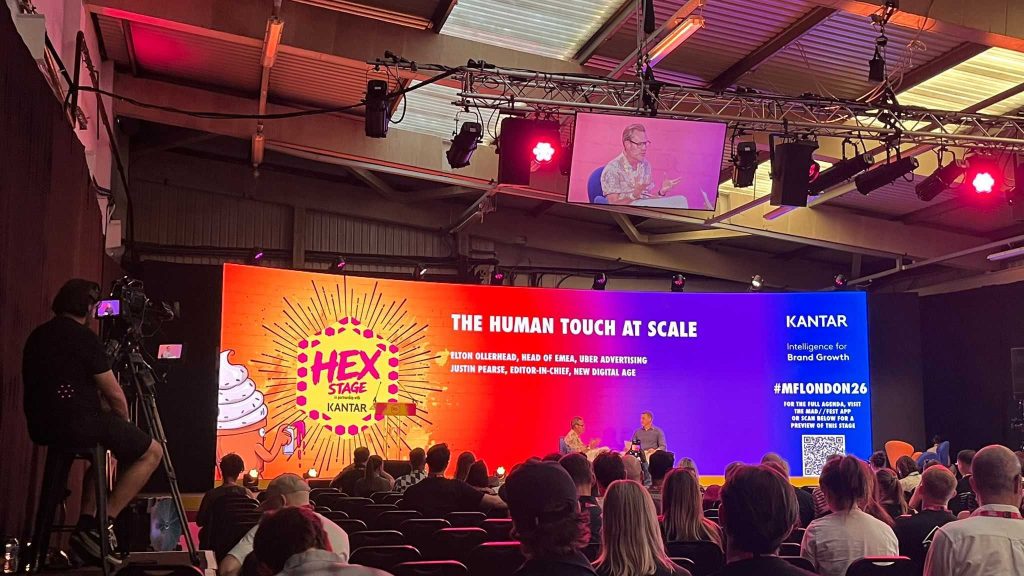
MAD//Fest is ‘the UK’s biggest, boldest + most distinctive marketing/advertising festival’. And in keeping with previous years’ themes on the effects of AI on the industry, this year it was ‘The Human Touch’, referencing the importance of humans in an AI-driven world.
It’s a three-day event organised by Ogilvy’s brilliant Rory Sutherland and includes speakers from Unilever, Leon, Dominos, Virgin, Barclays, M&S… there were 600 in all, including the event’s biggest ever draw, broadcaster Louis Theroux.
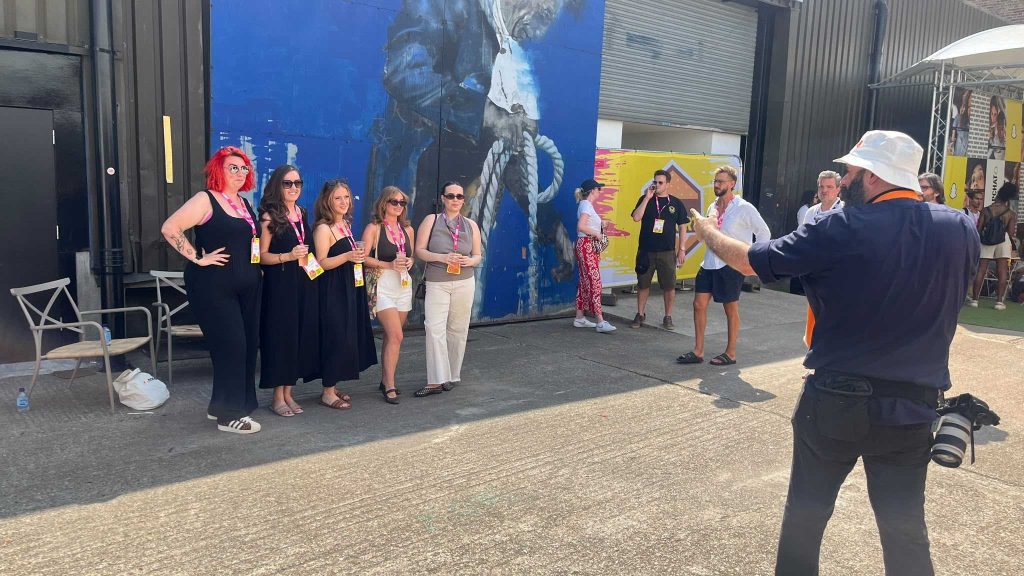
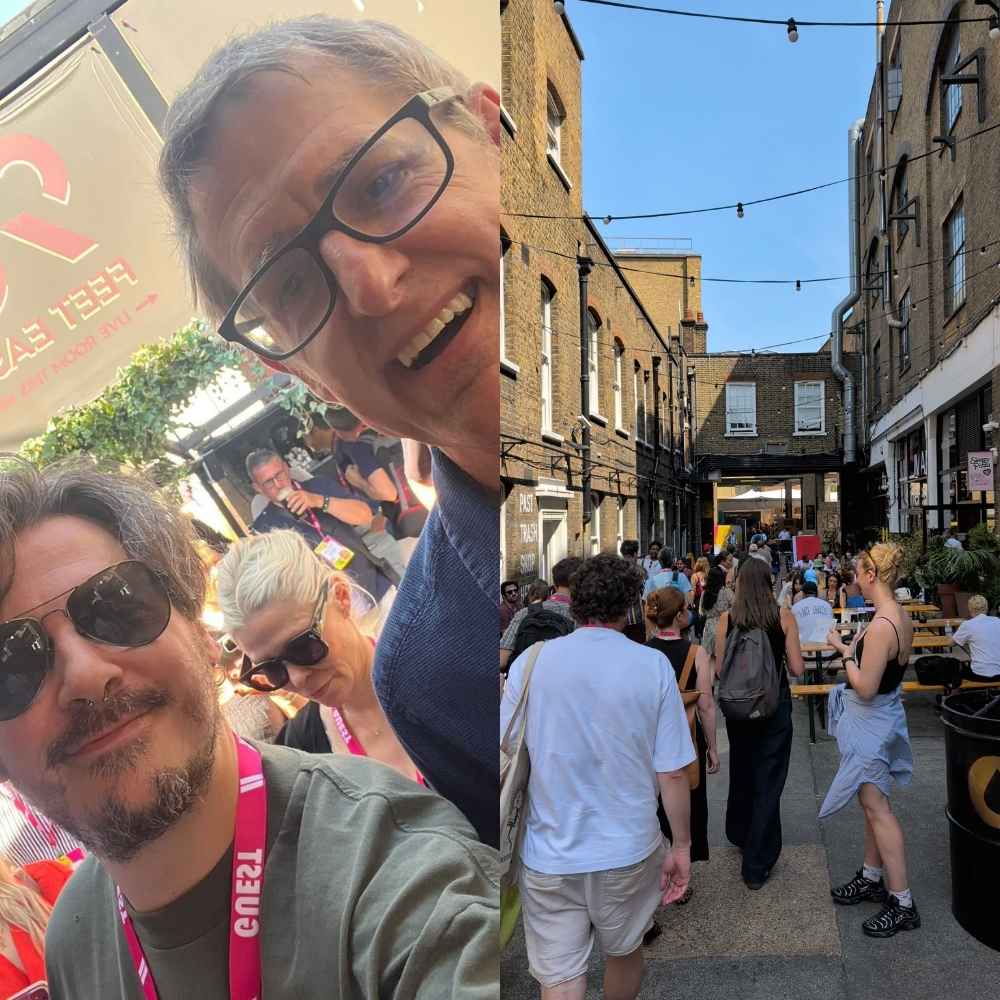
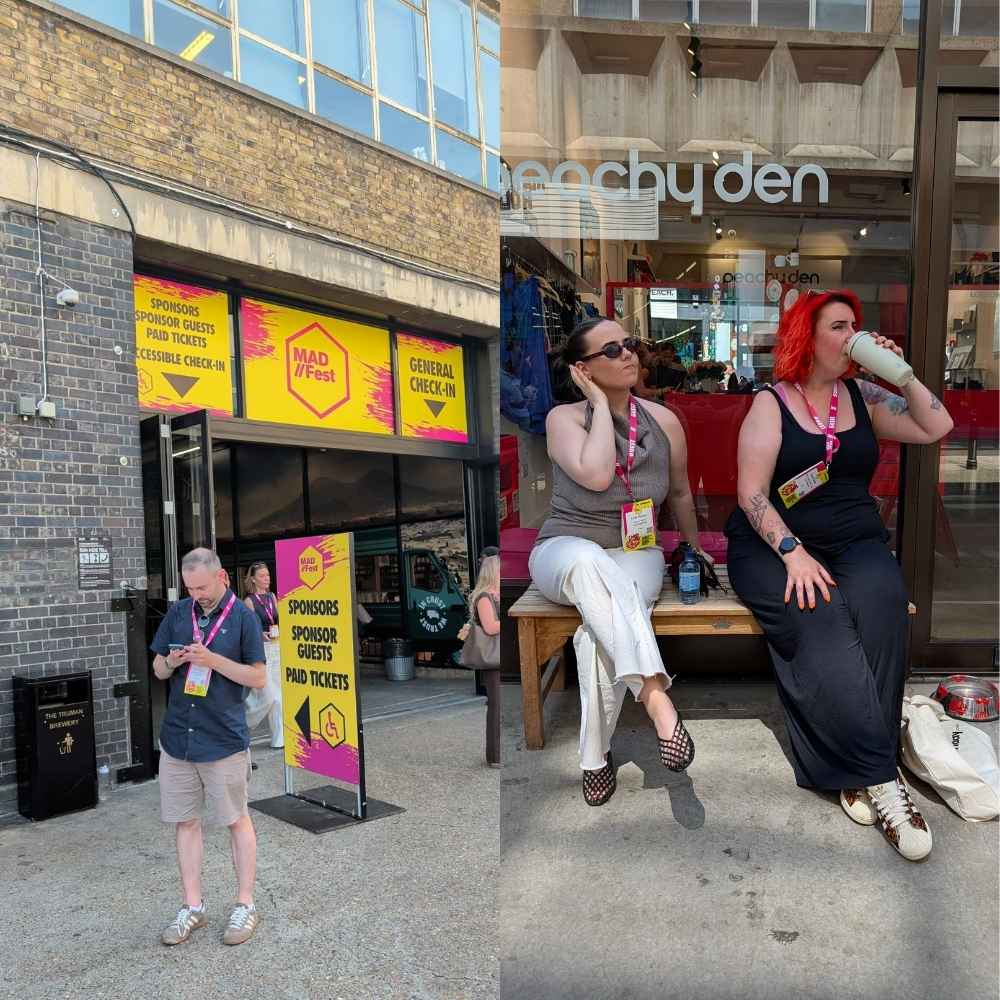
Earlier this month the team at Stacksmiths found themselves in the heart of London’s iconic east end for the annual invite-only, digital marketing meetup MAD//Fest. So, what did we take away from three days of being exposed to some of the biggest names in marketing and business?
The AI Hare and The Human Tortoise
For the last couple of years, it felt like the marketing industry had been trapped in a state of high-speed panic. Every event has been dominated by AI experts planting seeds of fear, urgency, and mystery. Get on board or else.
And yes, at Stacksmiths, we’ve seen AI impact every part of our offering as a digital marketing agency. But MAD//Fest highlighted a change.
We watched digital agencies rush to automate everything. They used AI to build “always-on” mechanisms that flooded every channel, from social media to search results.
Some clients saw AI as cheap labour and might question an agency’s costs. Because with a couple of prompts people could speak confidently based on what ChatGPT had replied for “Give a me a good marketing strategy”.
Understanding or context didn’t matter.
In this way, AI created the illusion of expertise and confidence, but not real competence. A meeting-room battle was won, but the war was lost.
As the saying goes… ‘easy come, easy go.’
Now there’s newer saying too… ‘AI slop’.
A Harsh Reality for the Digital Marketing Industry
AI made job execution into a commodity. Everyone uses the same algorithms and templates to generate copy, design layouts and chase keywords. Marketing strategy became an echo chamber. Everywhere the noise was identical.
Everything felt synthetic. The internet became awash with AI-generated slop.
But if MAD//Fest highlighted anything, it was that the future does not belong to the best automated content factory.
It belongs to agencies that know how to protect human intuition, and deliver authentic, deeply memorable campaigns across every touchpoint.
It’s why over the last couple of years we’ve seen shows like MAD//Fest, pivot away from the “embrace AI automation” hype and towards celebrating the authentic.
As our Head of Marketing put it after the three-day event: “I think we’re seeing an important distinction there that actually benefits and drives value in authentically led digital marketing campaigns in the long run.”
It does seem ultimately that the best marketers have arrived at the same conclusion: technology works best when it supports human connection, not when it tries to replace it.
AKA the human touch.
Clients are beginning to realise that if an agency just uses AI to churn out their work, they could eventually just do it themselves. And if AI can do it, then your competitors can do too. So, where’s the competitive advantage? You need to do the thing that can’t be recreated by an algorithm.
Growth with Slowth – The Strategic Performance Driver
For us MAD//Fest also built on another idea, perhaps best articulated by Glow founder Emma Harris, in her talk “Slow the Fck Down.”
Having survived a sudden cardiac arrest, Harris highlighted the catastrophic cost of the industry’s obsession with frantic busyness, over-working, and saying yes to every piece of low-margin tactical noise… ‘do four! It will be way better than two!’
Choosing to slow down and protect the creative isn’t a failure of ambition; it’s a requirement for success.
Marketing is a psychological game. An overworked digital marketing team falls back on safe, repetitive templates. In a world of zero-click, this is a killer. You become part of the noise, rather than a sought-after brand of repute.
Here, we use AI behind the scenes to handle routine data requests, basic formatting, and code structures. This actively buys back high-value time for our specialists to focus on what the algorithms can’t replicate.
We give our teams the “room to breathe” that’s needed to find non-obvious insights.
On Building Ritual Behaviours Across the Funnel
AI can generate thousands of ad variations in seconds, but it cannot (yet) invent shared cultural behaviour.
On day two, we saw Hacking the Human Mind author Richard Shotton highlight something that’s perhaps easily overlooked – how attributing a ritual to a product engages customers, creates emotional hooks, and makes a brand unforgettable.
Take a look at these examples:
- The Guinness Pour: Turning a waiting period into an anticipation building mechanism
- The Kit Kat Break: Transforming a chocolate bar into an actionable pause in someone’s day
- The Corona & Lime Wedge: Forcing a sensory habit that defines the entire brand experience
- The VW Camper Wave: Creating a subculture of community and identity
These aren’t algorithmically generated tactics; they are deeply human, observation-led concepts. But what’s even more interesting in terms of behavioural science is that the ritual increases the appreciation people have for the product.
The ritual is not just an affinity with a ‘club’. If you don’t have that wait for your Guiness, you don’t like it as much.
Flawless Contextual Timing Over “Always-On” Noise
The old digital marketing demanded maximum visibility. And it’s vital to be there when your audience is ready. But you need to be more.
Being authentic means that maximum impact comes from being visible at the exact right time, just like Rexona (Sure deodorant in the UK) placing their branding directly under the arms of World Cup referees and line staff.
By increasing the quality not volume of output, you save your creative and media firepower to strike perfectly when consumer context hits.
Why Consumers Crave Continuity
Many speakers at MAD//Fest highlighted how the “always-on,” hyper-automated approach is completely misaligned with what consumers actually value.
One Thinkbox study we caught on the first day analysed how different cohorts approach culture. Researchers ranked primary cultural forces (such as belonging, novelty, heritage, purpose, and currency) across two distinct groups: young adults (ages 16–24) and “all adults.”
The Universal Truth
Not surprisingly, both cohorts ranked continuity, that is long-term, dependable relevance, as the single most important thing about culture. And let’s be honest, if it isn’t relevant to you, why would you care?
Whether you are targeting a 19-year-old or a 50-year-old, humans are actively looking for stability and permanence.
Ok, so relevance isn’t a new idea, but when businesses use AI to frantically flood their world with disposable content and change messaging to chase weekly output levels, because it’s so easy now, they aren’t building relevance. They are destroying it.
Continuity is built through other things, like rituals. By slowing down the noise, you build the long-term, multi-generational habits that consumers are responding to.
The Divergence
In both groups their secondary drivers diverge sharply.
- For the Broader Market (Continuity + Purpose): Older demographics want depth, ethics, and clear foundational values. This is where our SEO, Email, Web Development, and Direct Mail teams excel. By slowing down to craft deep-dive newsletters, high-authority search content, and premium tactile mailers, we build high-intent, purpose-driven connections that last.
- For the Youth Market (Continuity + Currency): Gen Z demands that same core continuity, but they want it delivered via the live cultural zeitgeist, trend-led moments, and fresh novelty. This is the domain of our Social, Content, and PPC teams.
Now, if you map that data to dictate exactly how your brand communicates and where it spends its digital marketing budget, you can stop chasing short-term viral spikes and start building long-term, unmissable brand moments. And long-term brand moments win in a zero-click world.
The Key Takeaways: AI for Efficiency, Humans for Authenticity
“I couldn’t help thinking we’ve all just lived through a whirlwind romance with AI. We fell head over heels with the endless possibilities, convinced it was the one. Then reality set in, the cracks started showing, and suddenly everyone was reminiscing about the dependable relationship they left behind.” Danni, Account Manager, Stacksmiths Agency
AI can find patterns, but it cannot build empathy. The success stories won’t come from automation factories. They belong to the businesses that value quality over speed and volume, who protect the human elements, and deliver genuine, memorable campaigns.
In a beautiful world, it is the un-beautiful thing that stands out. In a world of speedy hares, the slower tortoise gets noticed.
AI has its role. It’s 100% the future. But for digital marketing that role is in a partnership with the human touch. Not a replacement for it.
As MAD//Fest put it, you need the human touch.
That said, we’re about to write a direct mail for a client. Yes, one that goes in the post. A human wrote it. AI can quickly pull the right targets out of a list of tens of thousands. Automation will print it, add a new address each time and even pop it in the envelope for us. And (hopefully) a human will open it.